Maritime transport
under the EU ETS
Who is covered?
Around 3,300 shipping companies are covered by the EU ETS.
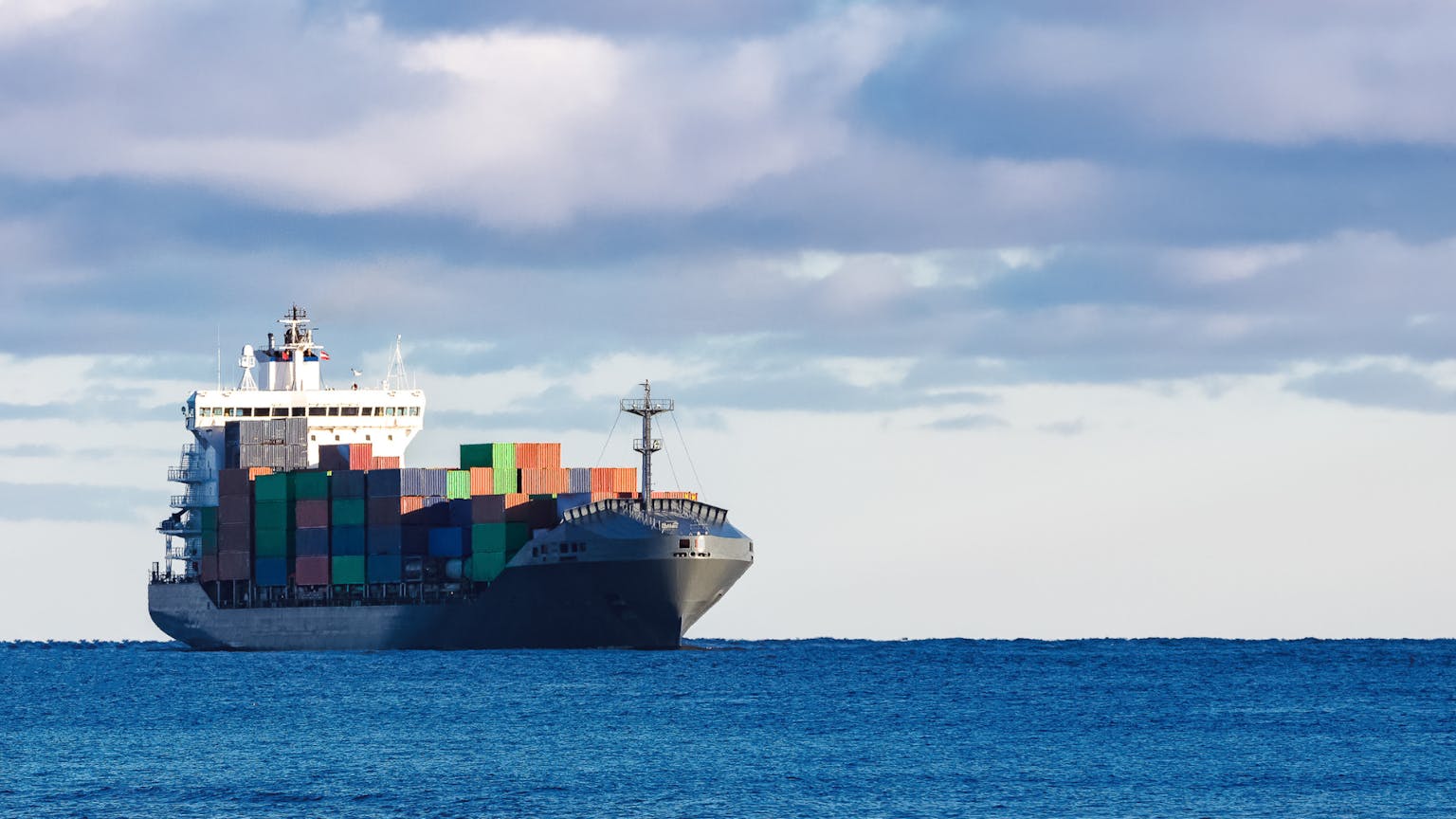
The EU ETS applies to passenger and cargo ships of 5,000 gross tonnage (GT) or more, regardless of the flag they fly, or the country in which the ship or shipping company is registered, if the ships call at, depart from, or operate between ports within the European Economic Area (EEA).
Shipping companies operating such ships must surrender emission allowances for carbon dioxide (CO₂) emissions.
Why is maritime transport part of the EU ETS?
Maritime transport causes significant greenhouse gas emissions in Europe, and emissions are increasing year by year. To achieve its climate targets, the European Union decided to include maritime transport in the EU ETS.
How is the system implemented?
The obligation to surrender allowances is phased in. Shipping companies must surrender allowances for:
- 40% of 2024 emissions
- 70% of 2025 emissions
- 100% of emissions from 2026 onwards
No emission allowances are allocated free of charge. Shipping companies must therefore purchase all the allowances they need.
Iceland and maritime transport under the EU ETS
Each shipping company covered by the EU ETS is assigned an administering state, and each company administered by one state only.
The European Commission regularly publishes a list showing which shipping companies are administered by each participating country.
A shipping company is administered by Iceland if one of the following applies:
- The company is registered in Iceland,
- Most of its port of calls within the EEA during the four years prior to publication of the list were in an Icelandic port,
- The company made no voyages within the EEA during the four years prior to publication of the list, but its port of call after publication was in an Icelandic port.
The latest list of administering states for shipping companies was published in late 2025.
Iceland as administering state
One Icelandic shipping company, Eimskip, is currently covered by the EU ETS. Iceland also acts as the administering state for several non-EEA shipping companies.
As of November 2025, the following shipping companies are administered by Iceland:
- Anglo-Eastern Cruise Management (United States)
- Compass Shipping 37 Co. Ltd. (Marshall Islands)
- Eimskip (Iceland)
- Hinase Ship Management Co. Ltd. (Japan)
- LFonds Management Pvt. Ltd. (India)
- Lindblad Expeditions LLC (United States)
- Salaverry Maritime Co. Ltd. (Marshall Islands)
- Vega Shipping LLC (United Arab Emirates)
Scope of emissions
The EU ETS for maritime transport covers:
- 100% of emissions from voyages between EEA ports
- 100% of emissions while a ship is at berth in an EEA port
- 50% of emissions from voyages between an EEA port and a port in a third country.
From 2026, shipping companies must also surrender allowances for emissions of methane (CH₄) and nitrous oxide (N₂O) resulting from the combustion of fossil fuels.
Shipping companies must surrender emission allowances equal to their verified emissions annually for the previous calendar year.
The surrender of emission allowances takes place in the Union Registry.
One allowance equals one tonne of CO₂-equivalent emissions.
If a shipping company fails to surrender enough allowances within the required deadline, the competent authority must impose an administrative fine of EUR 100 per tonne for each tonne not covered in time.
Exemptions
Shipping companies may surrender 5% fewer allowances for emissions from ice-class ships until 2030. Ice-class ships are specifically designed to operate in ice conditions and are therefore heavier and emit more greenhouse gases than comparable non–ice-class ships.
Other temporary exemptions apply until 2030, for example for voyages between a mainland state and its outermost regions (such as between Spain and the Canary Islands or Portugal and the Azores). These exemptions have little or no impact on the obligations of shipping companies administered by Iceland.
New requirements and future outlook
From 2025, shipping companies must also monitor and report emissions from:
- offshore ships of 5,000 GT or more
(surrender obligations begin in 2028 for 2027 emissions), - offshore ships and general cargo ships of 400–5,000 GT.
In 2027, a decision will be taken on whether these smaller ships will also be included in the EU ETS.
Was the content helpful?
Help us improve the content